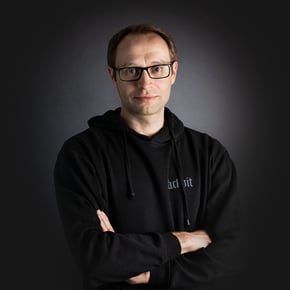

37 years. And a moment that matters. You can start an agency. You can build it up, rebuild it, and start over. You can weather crises, survive technological shifts, reinvent yourself – again and again, without a safety net. But eventually, the moment comes when you let go. Stefano Viani and Daniel Gerlach have reached that point. Not because they have to. But because it’s the right thing to do.
Göttingen, October 2026.
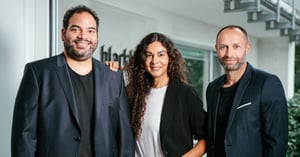
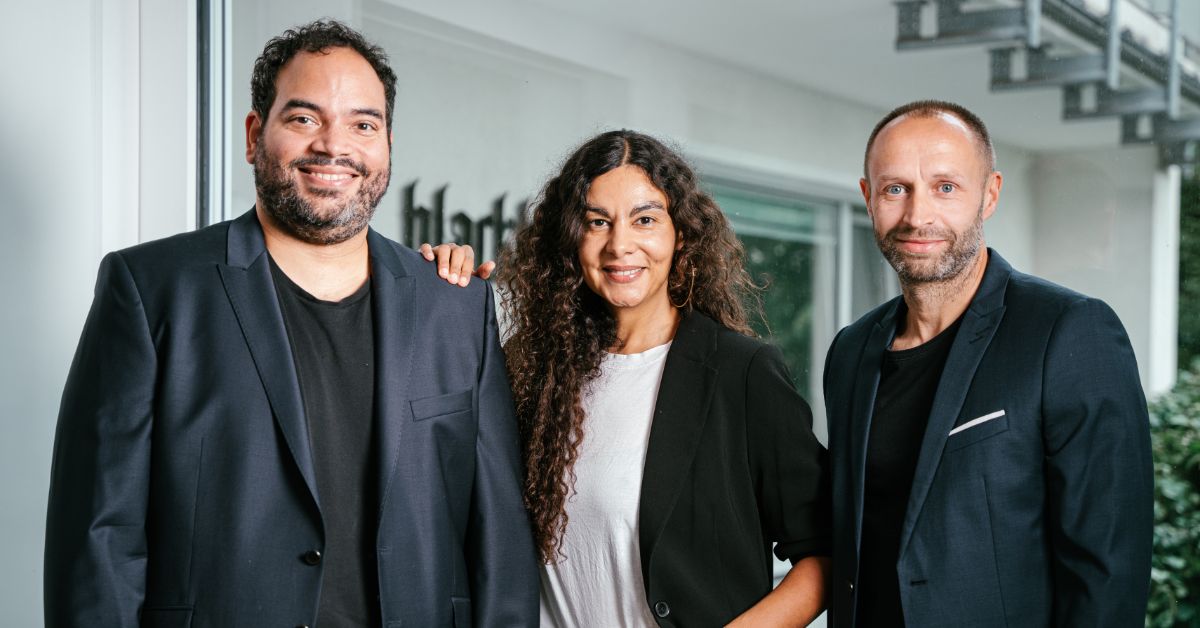
Three people are taking over the management of Blackbit today: Dennis Korbginski, Nadine Bisikati, and David Gottschalk. Together, they bring 40 years of Blackbit experience to the table. They don’t know this company from job interviews or onboarding documents. They have helped shape it—in good years and in difficult ones, during periods of growth and in moments when no one knew what the future held.
The fact that this day has come is no coincidence. It is the result of 37 years of groundwork.
1989. The same place. A kitchen table.
Daniel Gerlach, Stefano Viani, and his brother Remo Viani founded Blackbit. Desktop publishing, Göttingen—not exactly the big stage. What the three didn’t know back then: They were standing at the dawn of the digital age—they would be among the few who would not only survive every change but also shape it.
When the World Wide Web changed the world, they took action. When e-commerce emerged, they built one of Germany’s first B2B online stores in 1998. By the time digital commerce became a discipline, they were already right in the thick of it. Not because an investor demanded it. Not because an exit plan dictated it. But because Stefano Viani and Daniel Gerlach wanted to build a company that would stand the test of time.
Time and again, they reinvest rather than distribute profits—in people, in technology, in expertise. In a team that doesn’t rotate but grows. In customer relationships that develop into true partnerships. In a culture that doesn’t merely promise personal responsibility but structurally embeds it.
There have been offers to sell the company. More than once. They were turned down. Not out of stubbornness—but out of conviction. Blackbit was never just a product. It was a life’s work.
What lies between 1989 and today
37 years. Multiple reinventions. The Economy for the Common Good certification as a visible symbol of what has long been true internally. Preparations for “responsibility-based ownership”—a model that permanently secures what has always been our guiding principle: This company belongs to itself. About 50 employees. Locations in Göttingen, Berlin, Hamburg, and Kyiv. Partnerships that are no longer simply client-service provider relationships.
And three people who have been there throughout all these years. Who have seen how decisions are made. Who stuck with it when times were tough. Who have helped shape what Blackbit is today.
Back to the Present.
Dennis Korbginski has been with the company for 17 years. Nadine Bisikati for 13. David Gottschalk for 10.
They are not successors. They are Blackbit.
What is being formally completed today has long been a reality in practice. Leadership responsibilities have been handed over step by step over the past few years—deliberately, carefully monitored, and confirmed. Stefano Viani and Daniel Gerlach didn’t hand over the reins because they had to. They did so because they saw that it works—better than they had expected. As shareholders, they remain closely connected.
What remains. What’s to come.
For clients and partners, the essentials remain the same. Contact persons remain the same, projects remain the same, and the way we work remains the same.
What’s new: fresh energy. A different digital mindset. A generation that not only knows how to handle AI, data, and new speeds—but thinks in terms of them. Blackbit has always reinvented itself whenever the times demanded it. The new leadership team brings exactly what the next phase requires.
Blackbit remains independent. Blackbit remains committed to its values. And Blackbit continues to grow—as a commerce engineering and growth partner for small and medium-sized businesses in the DACH region, offering integrated services ranging from consulting and platform development to operations and digital growth.
The kitchen table from 1989 is no longer there. But what began back then lives on.