
Industry
Energy and Telecommunications Infrastructure
Challenge
EWE AG faced the challenge of consolidating a complex, fragmented IT landscape that spanned multiple brands and business units. Disparate platforms and integrations resulted in significant coordination efforts and limited scalability. The company sought a centrally managed architecture with standardized interfaces and clear scalability.
Results
With a consolidated multi-instance architecture on Pimcore, EWE now has a scalable platform foundation for multiple brands and business units. Integrations have been standardized, functional modules have been designed for reusability, and system complexity has been significantly reduced—providing a robust foundation for the strategic development of digital services.
Key Product
Enterprise platform architecture based on Pimcore
“One of the agencies that has impressed us through our collaboration and with which we’ve had particularly positive experiences.”

“For us, it was crucial to deliver a platform that both meets the complex requirements of the EWE brands and standardizes editorial and technical processes. With Pimcore, we were able to create a scalable solution that supports growth, shortens time-to-market, and sustainably improves digital brand management.”

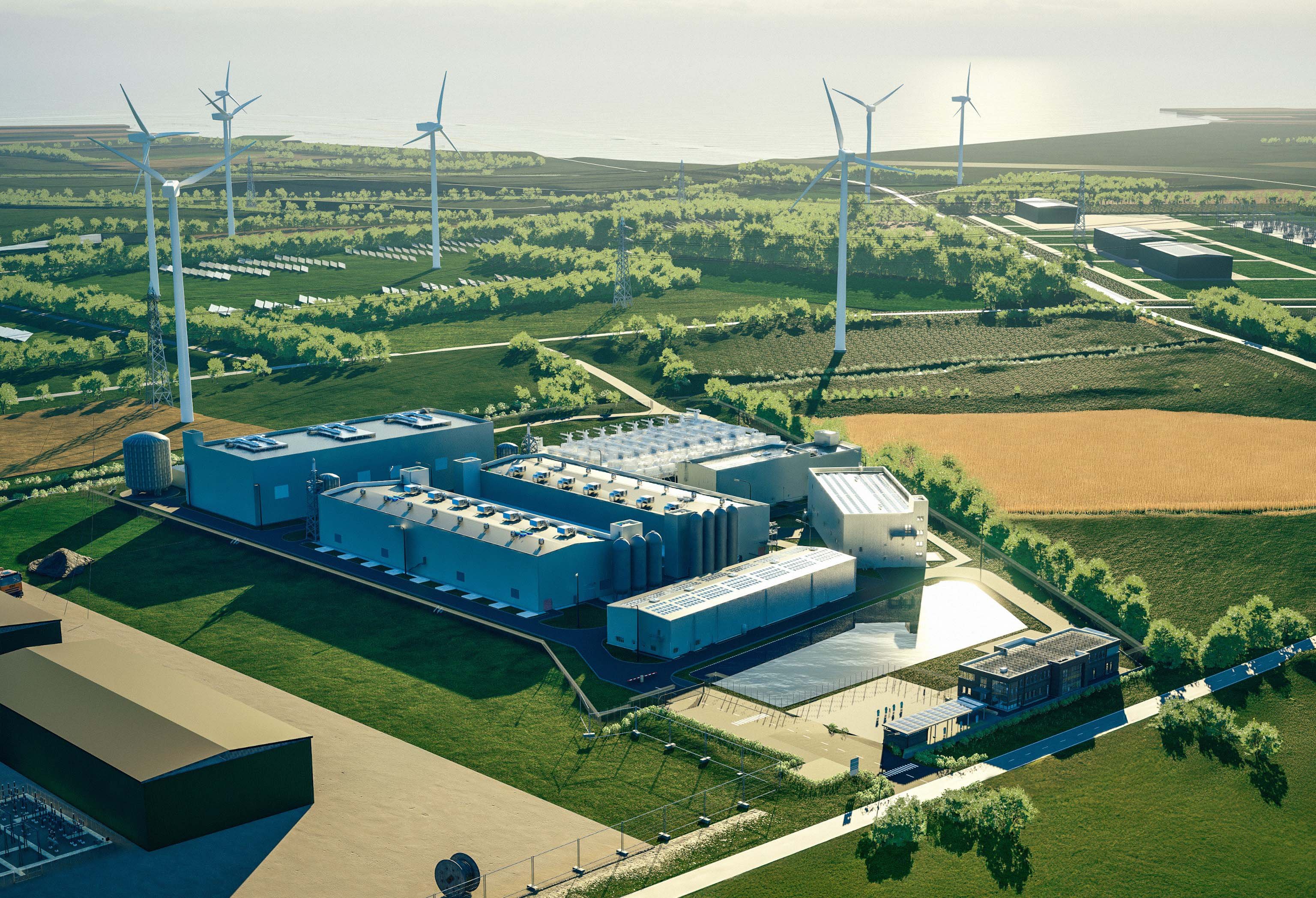
EWE – Shaping the Future of Energy Digitally
EWE AG is one of Germany’s leading energy and infrastructure providers. In addition to supplying electricity and gas, the group offers digital energy services and telecommunications solutions for residential and business customers.The combination of multiple brands, business units, and regional structures results in a complex digital system landscape with high demands on integration capabilities and scalability.
Starting Point: Different Brands, Established Structures
EWE AG operates osnatel and Werder Strom as independent brands with distinct market presences in the B2B and B2C sectors. Werder Strom and osnatel target exclusively residential customers, while EWE Business and osnatel Business focus on B2B customers.
Over the years, this has resulted in a variety of websites, structures, and editorial processes. Content was sometimes maintained redundantly, workflows differed by brand, and coordination between marketing and IT was time-consuming. Campaigns and new product launches required long lead times because structures were not standardized and interfaces with CRM and marketing systems were connected individually. In addition, adjustments to the corporate design were very time-consuming, as all solutions had to be modified individually.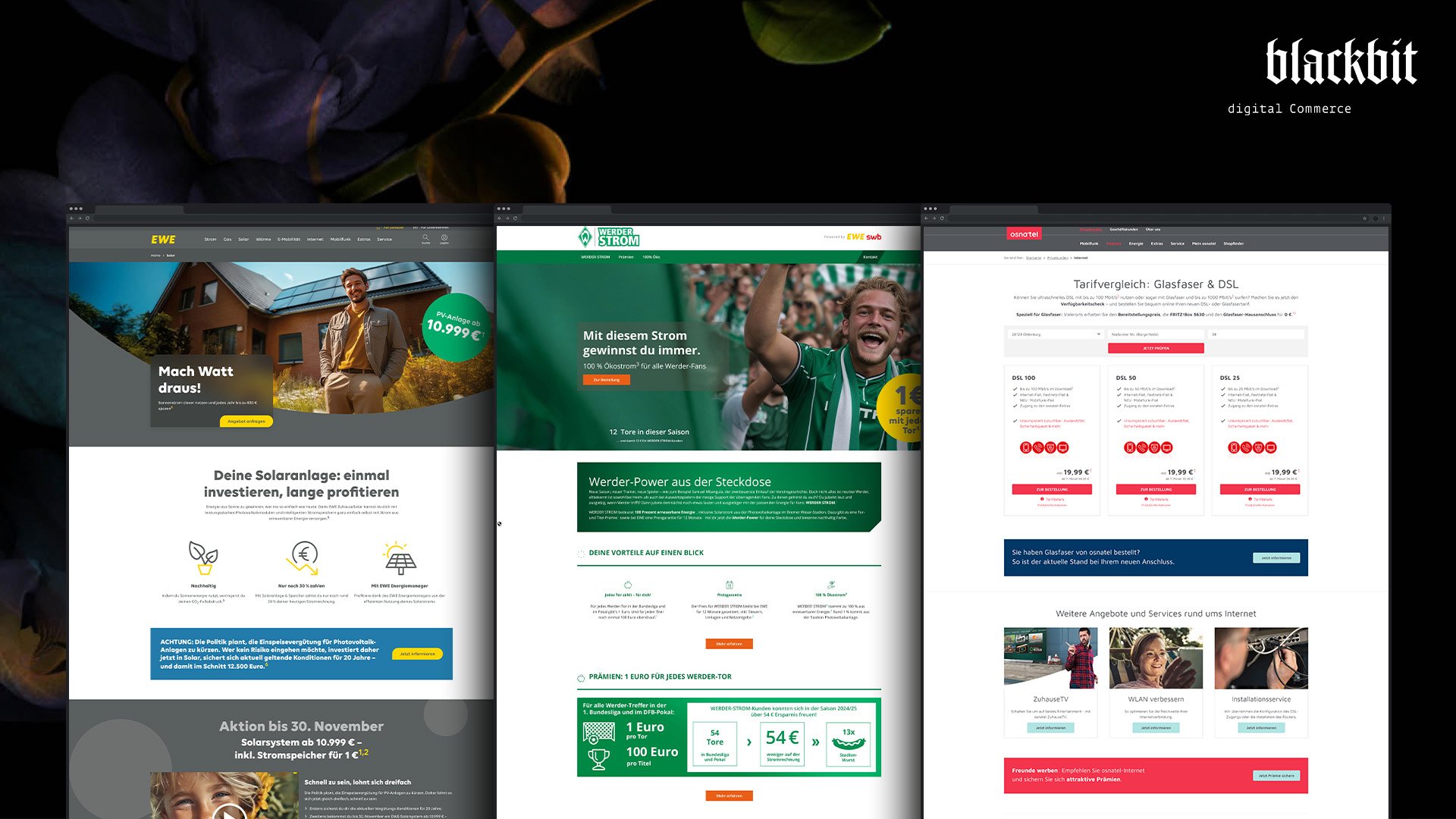 The company was looking for a centralized CMS for multi-brand management that could support multiple corporate designs within a single system framework, optimize editorial processes, and serve as a data hub between the website, CRM, and marketing tools—with the goal of significantly reducing time-to-market.
The Solution: Three Pimcore Instances for Brands and Business Units
Blackbit implemented three separate Pimcore instances for EWE AG, clearly separating brands and functions:
- Werder Strom & Shopfinder, osnatel & Shopfinder, EWE Backend Data – manages B2C offerings and central shop finder functions.
- osnatel, EWE Wärme, EWE Solar – consolidates product and offer pages for end customers.
- Business EWE and Business osnatel – supports the business customer portals with centralized data management and editorial processes.
In all instances, content modules are designed for reusability, and various CD/CI guidelines are consistently implemented. Standardized workflows, centralized content management, and clearly defined data structures enable the structured creation and cross-brand use of content. Forms and lead flows are systematically implemented so that B2B and B2C inquiries are processed efficiently.
Furthermore, Pimcore serves as a central data hub: product, pricing, and location information is maintained once and transferred in a structured manner to CRM and newsletter systems. Leads are automatically categorized and processed, avoiding media breaks and duplicate data maintenance.
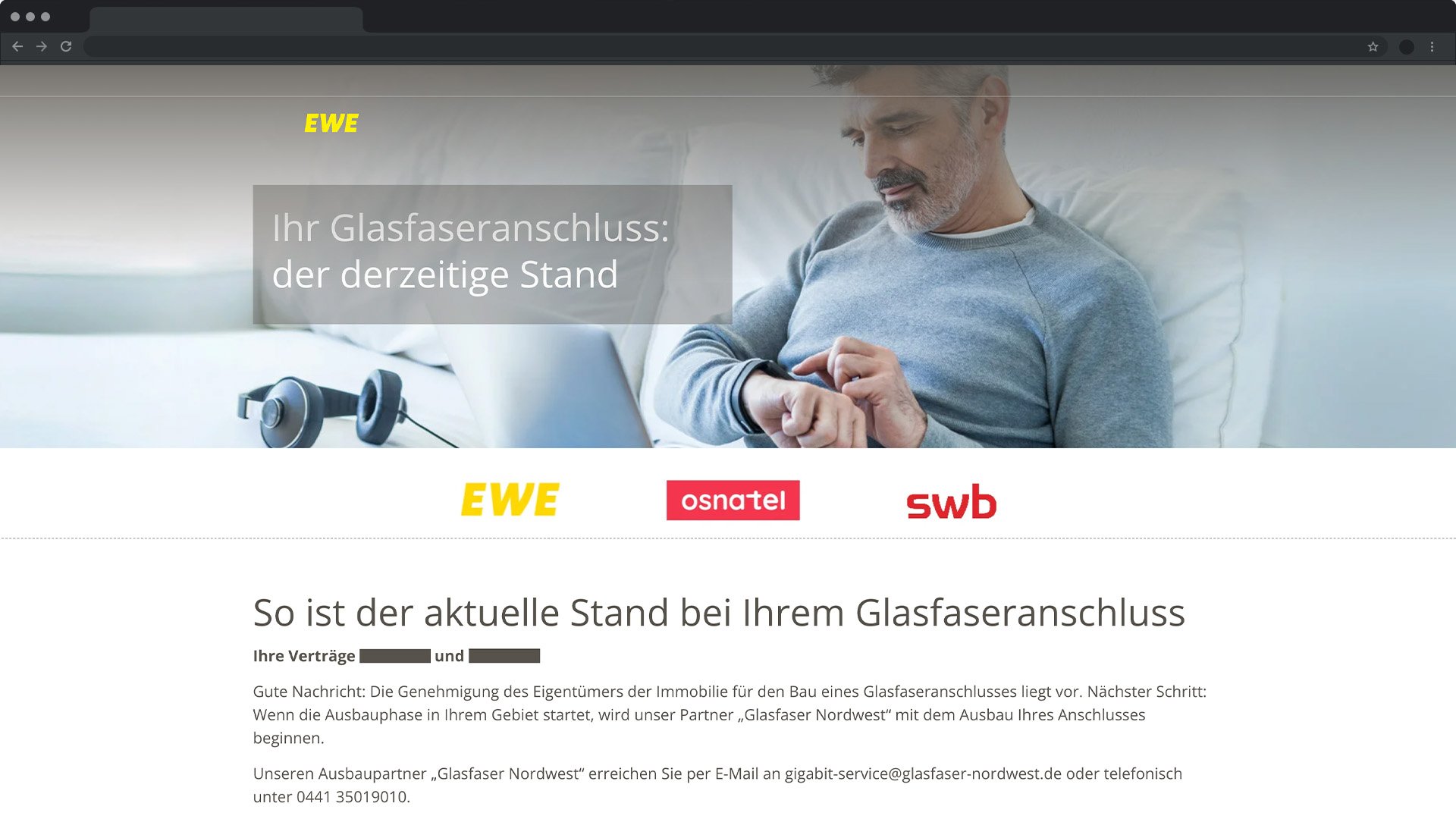
Integrations & Data Connections:
- ICECAT interface for the automated integration of structured product data for mobile devices and tablets:
This integration reduces manual maintenance processes and ensures consistent product information across multiple brands. - Lead API for CRM Integration:
The interface ensures consistent and standardized processing of customer inquiries within the existing CRM structure. - Integration of the consultant CRM with automated regional assignment:
Inquiries are routed based on category and region, eliminating the need for manual distribution processes.. - Integration of a dedicated transactional email infrastructure:
System communication is stable, scalable, and independent of individual platform components.
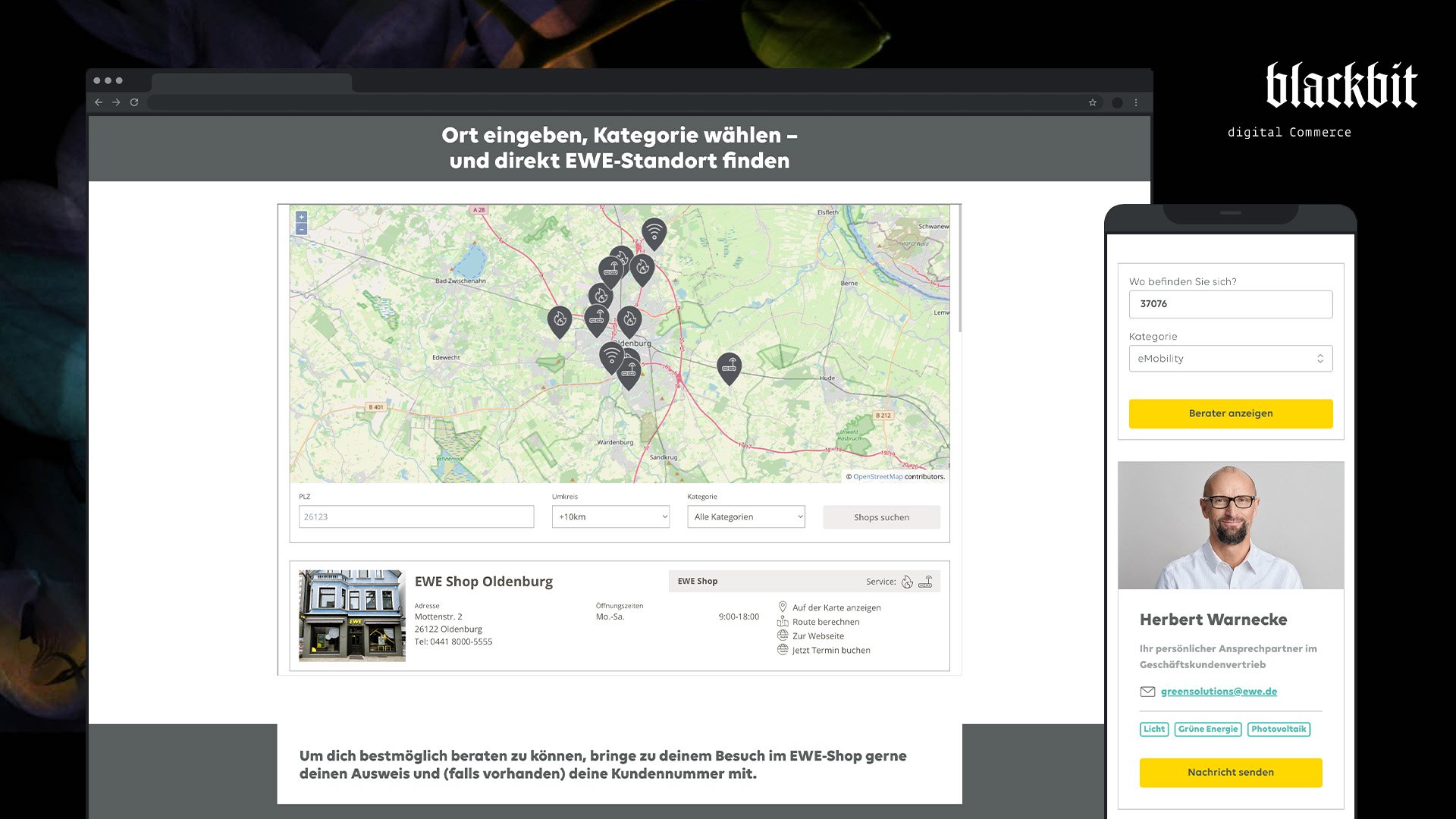
Location and Service Logic:
- Store locator with OpenStreetMap integration and filtering logic:
Location data is managed centrally and displayed consistently across all brands. - Advisor locator:
The automated assignment of contact persons reduces routing effort and supports clearly defined service processes.
Editorial & SEO:
- Flexible form logic for independently creating forms and campaigns:
The editorial team can implement new inquiry and lead structures without having to interfere with the technical system architecture. - Technical SEO optimizations, including automated sitemap generation:
The platform gains a structured indexing foundation and improves its technical discoverability. - Comprehensive page speed optimization:
The platform’s performance has been significantly improved, providing a stable foundation for conversion and user experience.
The consolidation resulted in significantly reduced system complexity, with standardized integration patterns and reusable functional modules.
This allows new products, campaigns, and services to be launched more quickly and with less coordination effort. Pimcore thus provides a robust, scalable platform that structurally supports multiple brands and business units and remains expandable over the long term.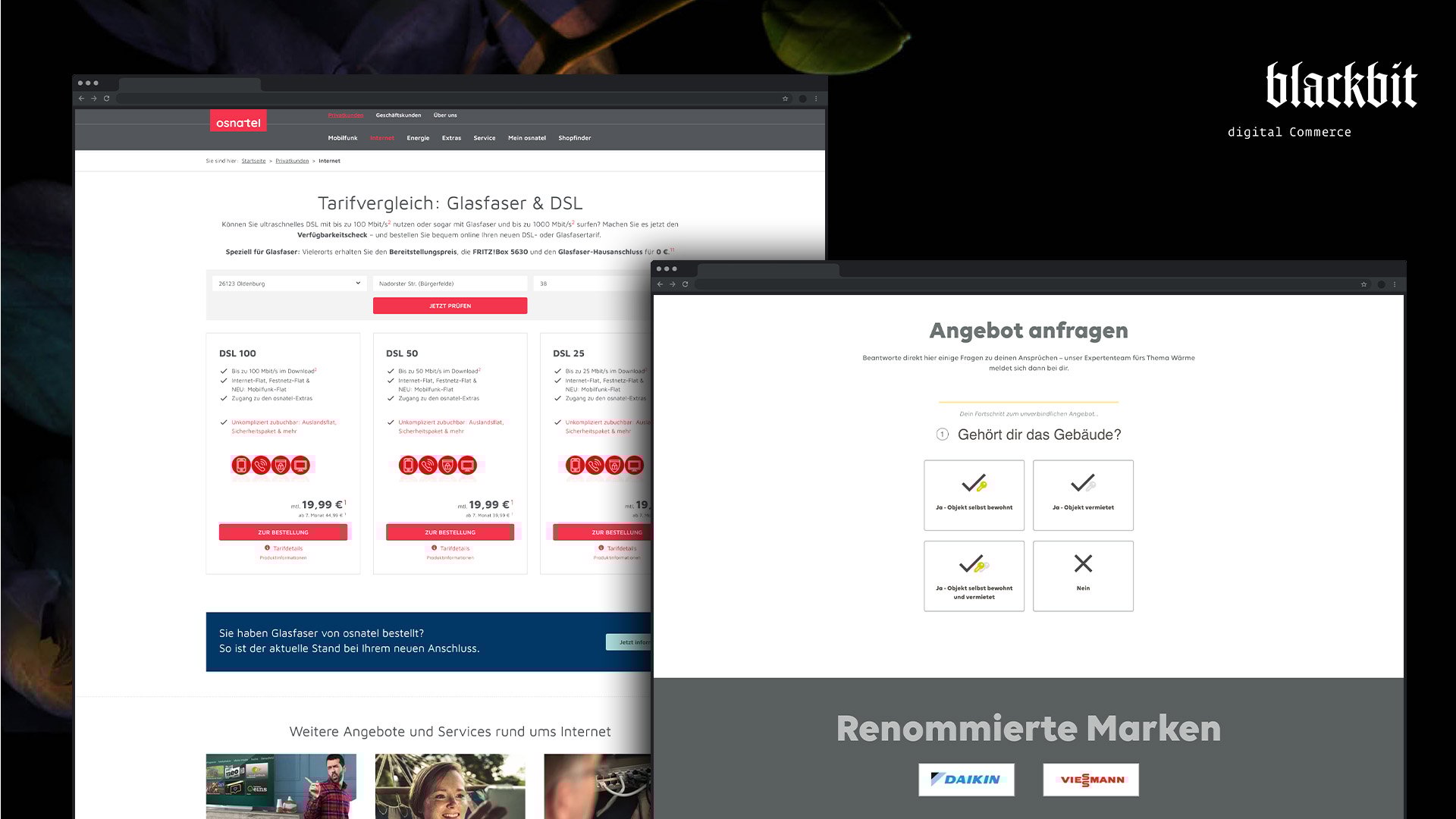
Results: Shorter Time-To-Market Thanks to Clear Structures
Thanks to the centralized CMS for multi-brand management, EWE AG was able to significantly streamline its digital processes. The standardization of editorial structures led to a noticeable improvement in workflow efficiency within the editorial team. Campaigns and new product pages can now be implemented much more quickly, which significantly shortens time-to-market.
At the same time, centralized data storage ensures consistent content across all brands. Interfaces are structurally integrated, lead processes are clearly defined, and system complexity has been reduced. The result is a scalable setup for B2B and B2C websites that supports growth rather than hindering it.
Conclusion: Structure Is a Prerequisite for Speed
In a multi-brand environment, a central CMS is more than just a content management system. It is the key to efficient processes, consistent brand management, and rapid implementation of digital initiatives. With Pimcore, a future-proof foundation has been established for osnatel and Werder Strom that combines marketing agility with structural clarity.
Multiple Brands. One Platform. Your Next Step.
